

Business Reporting Is Slow Because of Data, Not Reporting

For many growing businesses, monthly reporting is a race against the clock. The finance team spends days collecting spreadsheets, reconciling data, correcting coding errors, and following up missing information. By the time reports reach the leadership team, the information is often weeks old.
The response is usually predictable.
"We need better reporting."
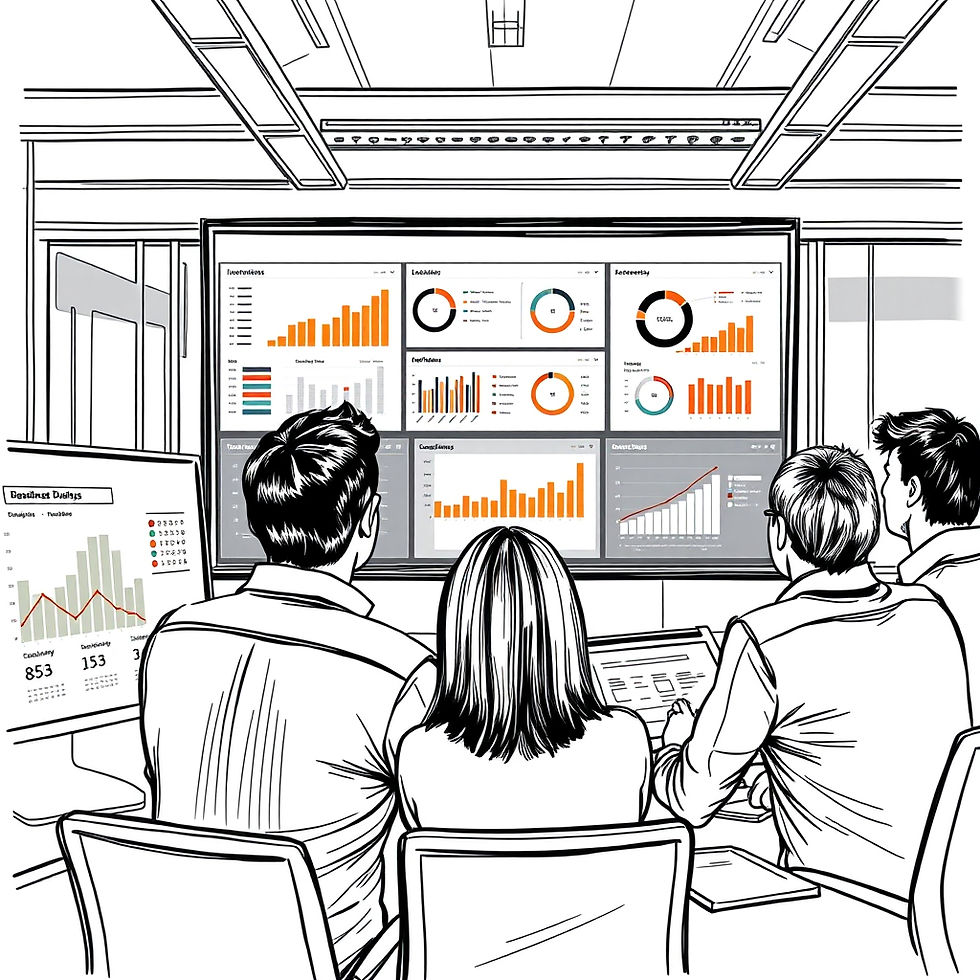
Perhaps. But in many cases, reporting is not the problem. The data is.
"The speed of your reporting is determined long before the report is produced."
Businesses often invest in new dashboards, business intelligence tools, or ERP systems expecting reporting to become faster. Yet the reports continue arriving late.
The technology changes.
The reporting process does not.
Reporting Starts at the Point of Data Entry
Every report is built on thousands of individual decisions made across the organisation. An invoice is coded incorrectly. A purchase order is raised without enough detail. A project is assigned to the wrong cost centre. A sales opportunity is never updated. A timesheet is submitted three days late.
Each action appears insignificant on its own. Collectively, they determine the quality of every management report.
"If the data going in is inconsistent, the reporting coming out will be too."
Many businesses believe reporting is owned by the finance team. In reality, reporting is an organisational responsibility.
Finance reports the data. The business creates it.
Employee Behaviour Shapes Reporting Quality
Technology cannot compensate for inconsistent behaviour. If employees do not understand why accurate information matters, reporting becomes a continuous exercise in correction.
This is particularly common in growing businesses where operational teams view administration as secondary to serving customers or delivering projects.
The consequences are rarely immediate. Instead, finance spends valuable time:
Correcting coding errors.
Following up missing information.
Reconciling inconsistent records.
Explaining unexpected variances.
The issue is not capability. It is discipline.
"Good reporting is built through good habits, not better spreadsheets."
The businesses with the strongest reporting cultures recognise that everyone contributes to data quality, not just finance.
Processes Matter More Than Reports
When reporting is consistently slow, many organisations redesign the report. Far fewer redesign the process that creates it.
Consider the journey of a single transaction. How is it approved? Who enters it? What validation occurs? How is it reviewed? Where does it flow next?
Every unnecessary approval, duplicate data entry point, or manual reconciliation adds time to the reporting cycle. By the time month-end arrives, finance is managing the accumulated consequences of inefficient processes.
"Fast reporting is usually the result of simple processes, not faster accountants."
The best reporting environments are designed long before reporting begins.
Automation Removes Repetition, Not Accountability
Automation has transformed business reporting. Bank feeds, workflow approvals, invoice capture, payroll integrations, business intelligence platforms, and robotic process automation all reduce manual effort.
These tools deliver enormous value. But automation only works effectively when the underlying process is consistent. Automating inconsistent processes simply produces inconsistent results more quickly.
"Automation accelerates process quality. It does not improve poor process design."
Businesses should automate repetitive tasks, not repetitive mistakes. Before investing in automation, ask whether the process itself deserves to exist.
The Right Tools Make the Difference
Growing businesses have access to exceptional reporting technology. Modern ERP platforms integrate financial, operational, inventory, project, payroll, and customer information into a single source of truth.
Business intelligence tools such as Microsoft Power BI, Tableau, and similar platforms transform raw data into interactive dashboards. Workflow automation platforms reduce repetitive administration and improve data consistency. Cloud accounting software provides real-time visibility that was unimaginable only a decade ago.
These technologies create tremendous opportunities. However, they all depend on one thing. Reliable data.
"The best reporting tools cannot create information that does not exist."
Technology should support disciplined business processes, not replace them.
ERP Is Not a Reporting Solution
Many businesses invest in ERP platforms believing reporting will automatically improve.
ERP systems certainly improve visibility. But they cannot fix inconsistent coding, poor governance, missing approvals, or unclear ownership.
An ERP reflects how the organisation operates. If processes are fragmented before implementation, the system simply makes those issues more visible.
"An ERP does not improve reporting. It improves the visibility of your reporting capability."
This is why successful ERP implementations spend significant time redesigning processes before configuring software. Reporting improves because the business improves. Not simply because the technology changes.
Reporting Delays Create Slow Decisions
The cost of poor reporting extends well beyond the finance function. When leadership receives information weeks after month-end:
Opportunities have already passed.
Cost overruns have already occurred.
Cash flow issues have already developed.
Operational problems have already become established.
Reporting should support decision-making while action is still possible. Not explain why performance changed after the opportunity to respond has passed.
"The value of reporting declines every day it is delayed."
Fast reporting is not about producing reports more quickly. It is about enabling better decisions sooner.
Build a Reporting Culture, Not Just a Reporting Function
The strongest businesses treat reporting as an organisational capability. Operational teams understand the importance of timely information. Leaders reinforce accountability for data quality.
Processes are designed to capture information correctly the first time. Technology supports consistency rather than compensating for inconsistency.
Finance shifts from gathering information to interpreting it. This is where reporting becomes genuinely valuable. Instead of asking, "What happened?", leadership begins asking, "What should we do next?"
"The best finance teams spend less time preparing reports and more time improving business performance."
Final Thoughts
Reporting is rarely slow because finance is inefficient. More often, it is slow because the data journey begins long before month-end. Employee behaviour, operational discipline, process design, automation, and technology all influence how quickly accurate information becomes available.
"Reporting is not a finance process. It is a business process."
Businesses that invest only in better reporting tools often see limited improvement. The businesses that improve their data quality, simplify processes, strengthen accountability, and automate intelligently create something far more valuable.
They create confidence. And confident businesses make better decisions.
Need Support?
If your reporting cycle is becoming longer as your business grows, the solution may not be another dashboard or reporting tool.
At Ordinis Advisory, we help growing businesses strengthen reporting capability by improving processes, governance, data quality, and systems so leaders receive the right information at the right time.
If you'd like to build faster, more reliable reporting that supports better decision-making, we'd be happy to help.
Disclaimer
This article is general in nature and does not constitute financial, operational, technology, or professional advice. You should consider your specific business circumstances and seek appropriate advice before making changes to your reporting processes or business systems.



Comments